Litre: Coin with Biggest Plastic Surgery Team In the World
Published on
History of Litre: Coin with the Biggest Plastic Surgery Team In the World Yet a Makeover No One Knew
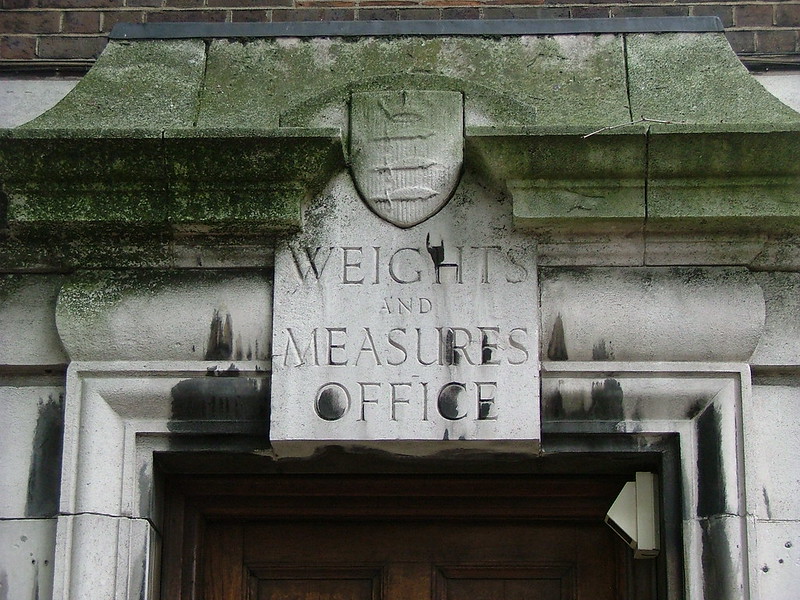
“Litre” (American: Liter) is a unit of measurement used by countries around the world, excluding 3 countries as of 2023: Liberia, Myanmar and the United States. Yet, not many people think much of its humble origins when we use it in our everyday maths homework or when we buy petrol for our car, assuming we are too busy crying from the pain caused by either. In this post, we will be exploring the etymology of the word “litre”, as well as explore some of the historical events that might explain the development of our word. Do read till the end to find out who are the plastic surgeons of the coin that I’ve mentioned in the title.
So for our very first word, we shall explore how on earth did we get to the globally renowned unit from something that started as a tiny, tiny, coin.
Ancient Greek Roots
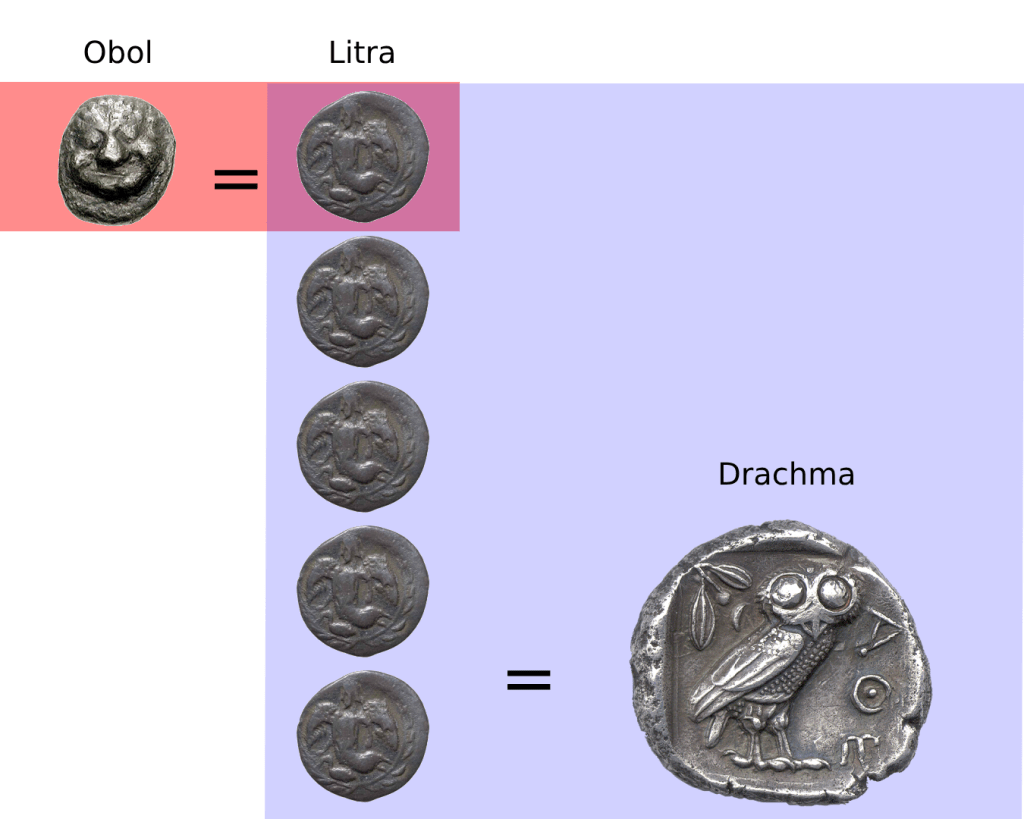
To trace back some of its roots, we head to Ancient Greece, where “litra” (Ancient Greek: λίτρα) was a silver coin in the Archaic to pre-Classical period, equivalent to 0.87g or 0.031oz. It had roughly the exact value of an obol, a Greek currency made of copper or bronze, and was 1/5 of a drachma, another Greek currency, but made out of silver, sometimes gold. So essentially, it looked something like this:
How did it make its way to the Romance languages then? Let’s look at Sicily, where the wheel starts turning.
With the first Greek colonies colonising the island in 8 BCE, the Greeks were then known as Siceliotes, which led to the spread of the Greek language among the native inhabitants of the island. Sicily then goes on to become an essential part of Ancient Greek territory, even being named “Magna Graecia”, or “Greater Greece”, by the Romans. Sicily’s fertile lands were an attractive prize for many civilisations, making the island a target both to the Greeks and the Romans, even under the hands of the Carthaginians at one point. In two Punic Wars, the first in 241 BCE marked the partial fall of Sicily to the Roman Republic, and the second in 212 BCE ended Greek independence in Sicily, ultimately leading to Sicily’s absorption into the Roman Republic.
Roman Adoption
Although Greek independence was defeated in Sicily, it was not the end of Greek culture and language. It was adopted into the Latin vocabulary, giving “litra” a makeover. “Litra”, which became “libra” under Roman influence, was used as a new unit of measurement with new accompaniments of 12 “uncia”, with “uncia” representing 1/12 of a Roman foot (from which we derive the terms “foot” and “ounce”). “Libra” by this point had been completely transformed, shifting from its original usage and purpose. Initially starting out as a small silver “litra” not weighing more than a gram, “Libra” has come to represent the Roman pound (hence, where we get “lb” from), which weighs 328.9g in metric, 11.6 oz, or 0.725 lb in imperial.
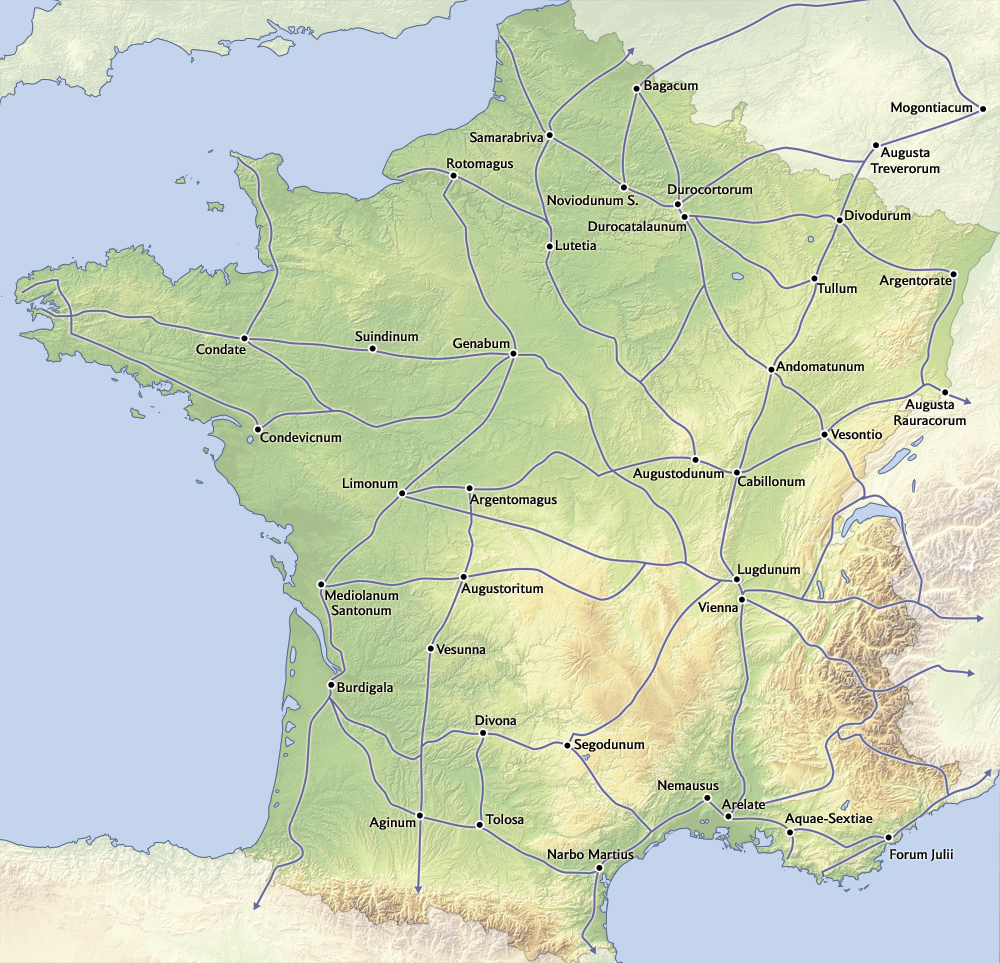
The Crisis of the Third Century, also known as the Imperial Crisis, began with the assassination of Emperor Severus Alexander in 235 AD, marking the transition from Classical to Late Antiquity. The crisis ended with Diocletian’s reign, which divided the empire into four regions. Gaul, by this point, had already been beaten to submission (kind of) by the Gallic wars by Julius Caesar and was conquered as a Roman province at 27 BCE. The Crisis essentially contributed to the establishment of the Gallic Empire, which, following the collapse of the Western Roman Empire, gave rise to the Kingdom of Franks, ultimately evolving into the modern nation of France.
New Beginnings
So far, I’ve given you a hint on which country won if there was a competition wherein “Final suggestions for baby names” and the voting system was by having your family members and descendants name their baby the exact name you voted for. (Hint again: It’s the French) Now let’s look at how we get from years of linguistic development to the word we know today.
In late medieval France, which was then the Kingdom of France, French was beginning to become the official language of the Kingdom, with Medieval Latin used primarily for scholarly and religious purposes. In fact, by this point in history, due to the widespread historical usage in most of Western Europe, Latin has become the language of science, literature, law, and administration. It is also commonly associated with the rich, as only the wealthy and powerful have access to these fields of work or study. It is also around this time that we start seeing the introduction of “litron”, a Byzantine Greek word (Litron: λίτρον) transcribed into Late Medieval Latin, being used as a measurement for grain.
On 8 May 1790, after acknowledging that the lack of a uniform measurement was one of the major causes deterring international trade and resulting in economic loss, the French National Assembly decided to create a system of weights and measurements with a set of rules, which was formally approved on 7 April 1795. However, this was only in France. During the development, “cadil” was used as a name before “litre”; a remodified “litron”, took over and was proposed in the formal approval in 1795.
Mouth Developments
So, how did we get from “litra” to “litron” and finally to “litre”? We have our generation’s worth of efficient laziness to thank for, all in our mouths. Let’s look at the vowels. Not in order that we usually think of, but in the order that our mouths are comfortable saying in:
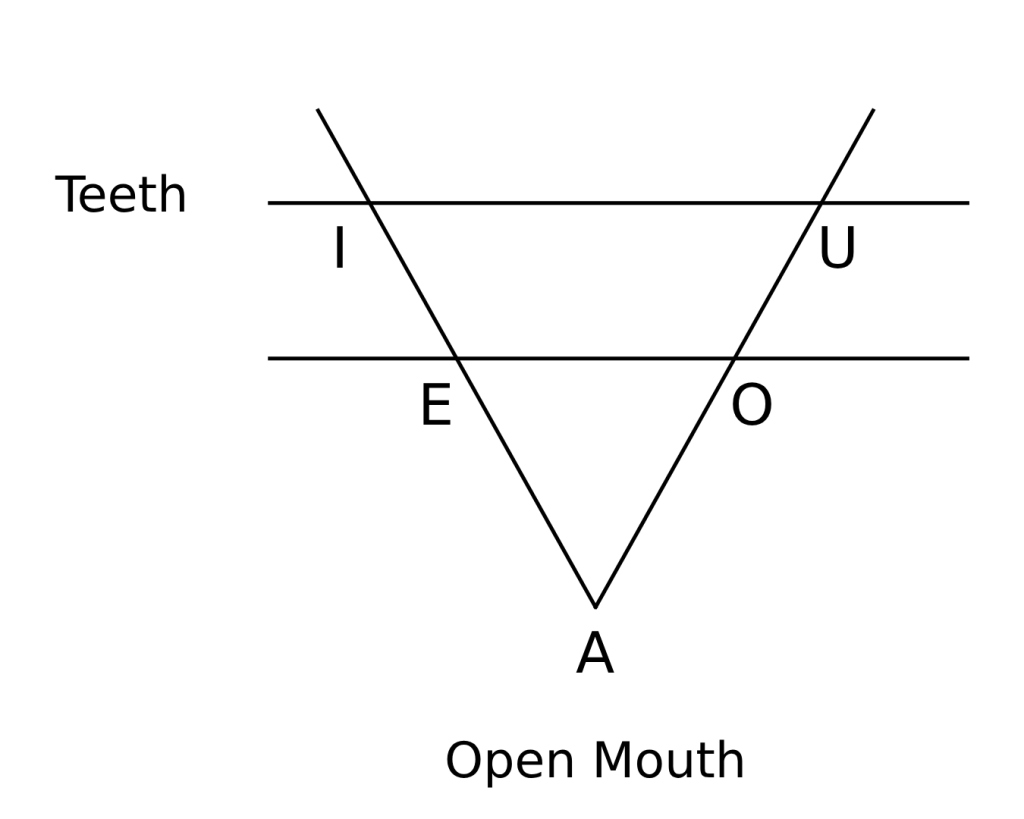
Think of the V Shape as the movement of the jaw, corresponding to the vowel sounds represented in the image on the left. Don’t pronounce the vowels as “aei” for ‘A’, but rather in the Spanish way. So, you will want to pronounce it as “ah”, “eh”, “ee”, “ou”, and “uu”, if referring to the vowel order that we are familiar in this day and age.
Disclaimer: This is intended for speakers of romance languages.
So, if you can imagine this, you are a salesperson who is on a small Gaul road selling grains and whatever you can harvest that year to passing travellers, and they come to you asking for a litra of grains. So, you confirm with them by saying, “Litra?”
Generations pass by, your great-grandchildren are tending to the same store on the same road, however, it’s now a small village. There are more customers now, so there’s a need to say the word faster. “Litra” has become something sort of a quick, unintelligible sound, but people can kind of understand it due to context.
Fast forward a few more generations, and the village has grown into a town. Your shop, which grew from humble beginnings, has grown into a big provisions shop, with your descendants tending to many customers that they can barely keep up. So many that the word “litra” has transformed to “litron”. Could it be from the influence of the Byzantine Greeks? Or was it due to the need to keep up with the number of customers?
Who knows? But did you realise that when you mouth the word from “litra” to “litron”, your mouth movement gets reduced a little? Try it with “litre” next. You’ll also realise that your mouth movement gets even further reduced. This is called a vowel reduction, and it can happen in many different way. Some other examples of words you may not have realised that have gone through this process were “name”, “feed”, and many other words in your daily lives.
With the world’s largest team of plastic surgeons, “litre” was able to maintain its dignity as a measurement unit and even find fame worldwide, despite its humble beginnings as a small silver coin.
We saw how the coin, under the control of the Romans, changed meaning and purpose, and changed the course of history for centuries. As Napolean Bonaparte often mentions history as a “fable agreed upon”, language is often spoken by victors of wars and colonisers, effects we still see today. Language is also something that is easily degraded and depraved from the original pronunciations over generations, as human civilisations move from place to place and create their own civilisations, or maybe even taking place at the exact same place that started it.
Which makes us wonder: What are some words that have eroded with time that we are seeing at this point in history? Do share your thoughts in the comment section below!
References:
Litra – Dictionary of Greek and Roman Antiquities
Libra (Unit of Weight) – Britannica
Measurements for Roman Litra – Dictionary of Greek and Roman Antiquities
Sicily under Greece (Timeline) – Ancient Greece
France Adopts the Metric System – EBESCO
How Language Changes: Sound Changes – Great Courses Plus feat. John McWhorter


Designed with WordPress
 Love in Languages
Leave a comment